


Before the museums
In Conversation with Mira Chai-Hyde
Long before Alexander McQueen became the subject of museum retrospectives, Mira Chai-Hyde knew him simply as Lee. Her archive preserves the garments, photographs and traces of a life lived close to the making of the work.
Proximity
Before the archive became history
The Mira Chai-Hyde Alexander McQueen archive does not begin with acquisition records. It begins with proximity.
Its pieces entered Mira’s life through friendship, work, exchange and trust: a jacket given after a show, a skirt made under Lee’s direction, a dress handed over in the studio, an invitation kept, a photograph preserved, a lock of hair stitched into a label. These are not objects gathered from a distance. They are the remains of a life lived close to the making of the work.
Before the garments became museum pieces, before the runway images entered fashion history, before Alexander McQueen became a name surrounded by myth, Mira knew him simply as Lee.
Hoxton
Within the private architecture
Their story began in Hoxton, in the charged atmosphere of London in the 1990s. Mira had come to the city to study at Vidal Sassoon and would go on to live there for 18 years, moving through its fashion, music and creative underground with an instinctive understanding of image. By the time she was living above McQueen’s studio, hair had become more than her craft. It was her language: a way of shaping character, attitude, intimacy and transformation.
Lee was working below, with the restless intensity of someone pushing fashion beyond the limits of clothing and into something more psychological, more cinematic, more emotionally exposed.
Their friendship formed gradually in the daily rhythm of the building: conversations between floors, shared references, late nights, humour, pressure and the quiet familiarity of work taking shape nearby. What developed was not simply a personal bond, but a creative proximity. Friendship became collaboration, and collaboration became part of the life they shared across the same rooms.
For nearly two years, Lee lived with Mira in her Hoxton Square loft. The space became home, refuge and informal studio. Mira saw the work before it became spectacle. She saw the nights before the shows, the garments taking shape, the discipline beneath the provocation, the tenderness beneath the severity and the vulnerability behind the force.
Mira was not observing McQueen’s early world from the outside. She was part of its private architecture.

A lived archive
What remained
She cut Lee’s hair. She worked on his menswear shows. She contributed to campaigns and helped shape the hair and grooming that formed part of his visual language. Through Mira, Lee encountered the cult film The Hunger, which became an important reference for his Spring–Summer 1996 collection.
Around them moved the figures who would become central to the early McQueen universe: Isabella Blow, Sarah Burton, Shaun Leane, Katy England and the wider circle of London creatives who understood that fashion could be raw, intelligent, dangerous and deeply alive.
Over time, garments entered Mira’s life. Some were gifts. Some were exchanged for work. Some were made specifically for her. Others were given informally, in the way objects pass between people who are not thinking of history at the moment of exchange.
Mira kept them.
Today, those pieces form one of the most intimate Alexander McQueen archives in private hands. Their significance lies not only in rarity, but in context. They carry the conditions of their making and the relationships through which they passed. They are not trophies of fashion history. They are evidence.
It is not a collection assembled retrospectively. It is a lived archive.
The archive spans some of McQueen’s most defining collections, including Highland Rape, The Hunger, Dante, Bellmer La Poupée, It’s a Jungle Out There, No. 13, VOSS, Irere, Plato’s Atlantis and his work at Givenchy. Together, the garments trace the evolution of a designer who transformed fashion into theatre, critique, autobiography and emotional architecture. Seen through Mira’s archive, they also reveal something less often preserved: the private life of the work before it became public history.
Garments
Objects carried through friendship


Four memories
The life held inside the clothes
Among the earliest McQueen pieces in Mira’s archive is a hunter green military-style jacket from the Highland Rape, Autumn/Winter 1995 runway collection. Cut in wool and detailed with gold braid, a mandarin collar and a structured peplum with penny weights, the jacket carries the severity and historical charge of McQueen’s early work. It belongs to one of his most controversial and defining collections, but in Mira’s archive its significance is also personal. The piece entered her life through her proximity to Lee and remains tied to the creative exchange between them.
Also from the Highland Rape runway collection is a pair of low-rise bumster trousers, one of the silhouettes through which McQueen permanently altered the fashion body of the 1990s. The trousers were cut to sit unusually low on the hips, exposing the base of the spine and lengthening the torso. What might now be understood as an iconic McQueen shape was, at the time, a radical adjustment of proportion and gaze. Mira did not encounter the bumster as an image alone. She wore the silhouette herself and understood its effect physically: the shift in posture, the exposure of the body, the tension between vulnerability and control.
A burgundy organza coat from The Hunger, Spring/Summer 1996, introduces a different register of memory. Semi-transparent and finished with a feathered design and sharply peaked lapel, it combines delicacy with the more predatory elegance that ran through the collection. Mira remembers receiving it during an evening in the Hoxton loft with Lee and Isabella Blow. They were sitting together, talking and laughing, when Lee went downstairs to the studio and returned with gifts: one for Isabella, and this coat for Mira. The gesture was informal, but its informality is precisely what gives it weight. It records a moment of friendship rather than ceremony.
A further personal piece is a dark green low-waisted skirt made to order for Mira around 1995 under McQueen’s direction. Related to his exploration of the dropped waist and the exposed lower back, the skirt was not simply a runway object transferred into private ownership. It was made for Mira specifically. Lee selected the fabric himself, and the garment carries the intimacy of something designed with a particular body and person in mind. Its importance lies not in spectacle, but in closeness: a private commission within a friendship that was also a working relationship.
That same intimacy appears elsewhere in the archive, often through details that are almost hidden. A nude silk illusion gown from The Hunger contains one of McQueen’s early hair labels: a transparent pouch holding a lock of human hair stitched beneath the Alexander McQueen label. The detail is small, but deeply charged. It turns the inside of the garment into a private site of memory, bringing the body into the construction of the object itself. For Mira, whose own practice was rooted in hair, the gesture has particular resonance. Hair was her medium, and in McQueen’s work it became evidence, relic and trace.
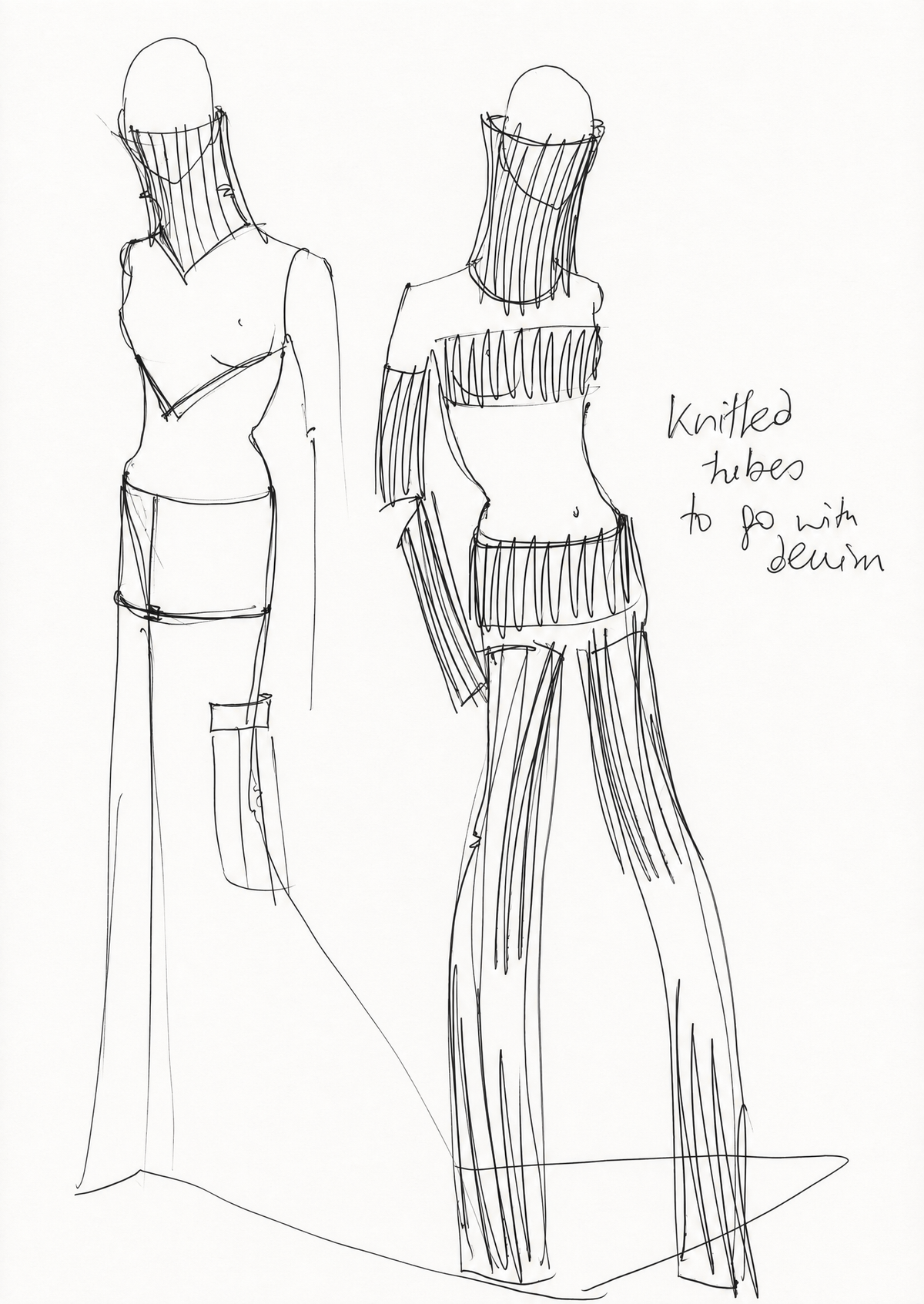
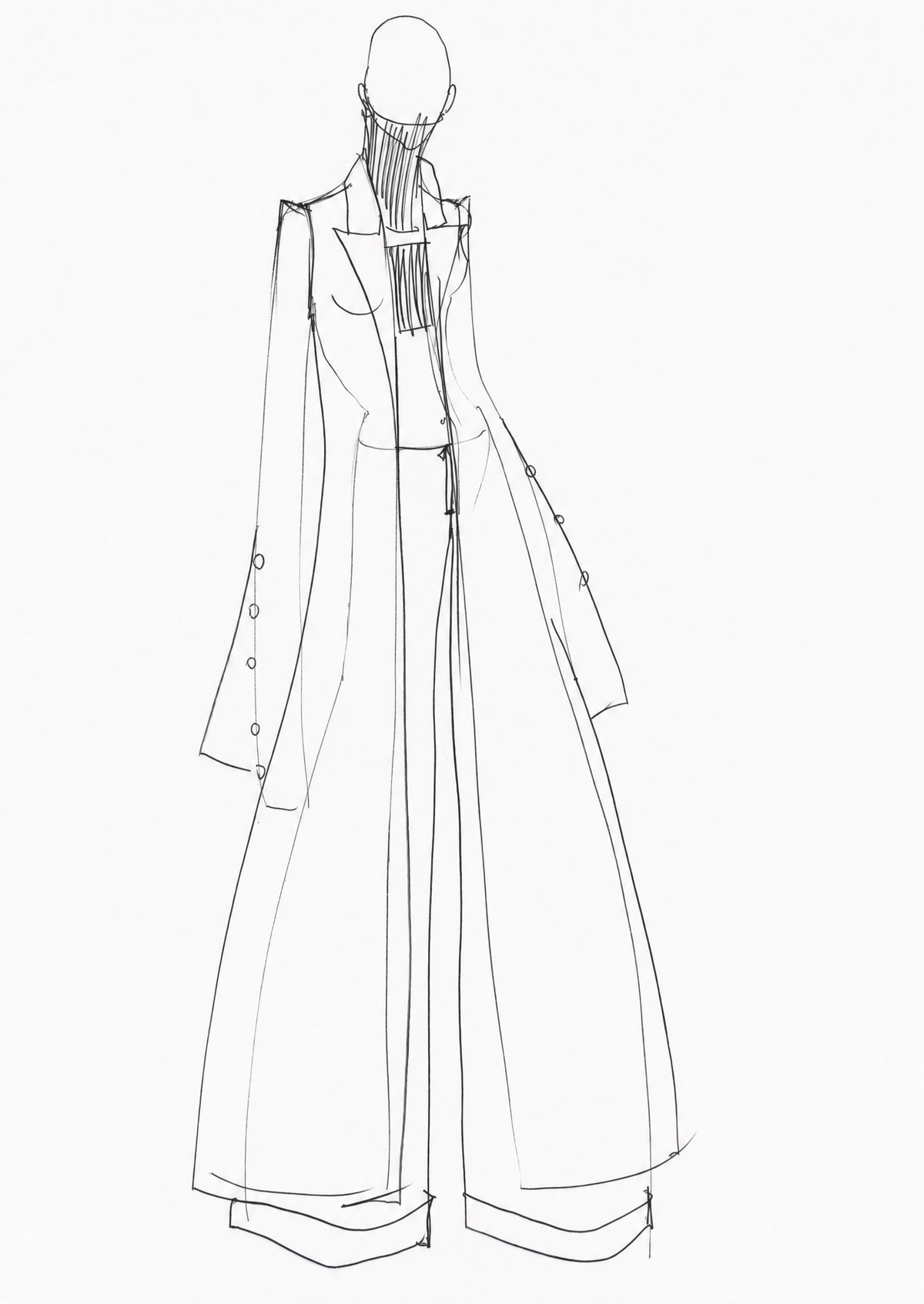
Other objects in the archive record the working life around the garments. A black silk satin dress, handed to Mira late in the studio after the sewing machines had fallen silent. A glass jar holding fuchsia glitter and fabric remnants. Original sketches. Show materials. Invitations. Passes. Hangers and garment racks from the Hoxton Square studio. These pieces may appear quieter than the runway garments, but they are essential to the archive’s meaning. They preserve the daily conditions of fashion: fittings, edits, materials, gestures, favours, labour and trust.
Fashion history often begins with the runway image. Mira’s archive widens the frame. It preserves not only the finished garments, but the private world around them—the exchanges, access, trust and proximity through which McQueen’s work first came into being.
Behind the runway
Before spectacle became image
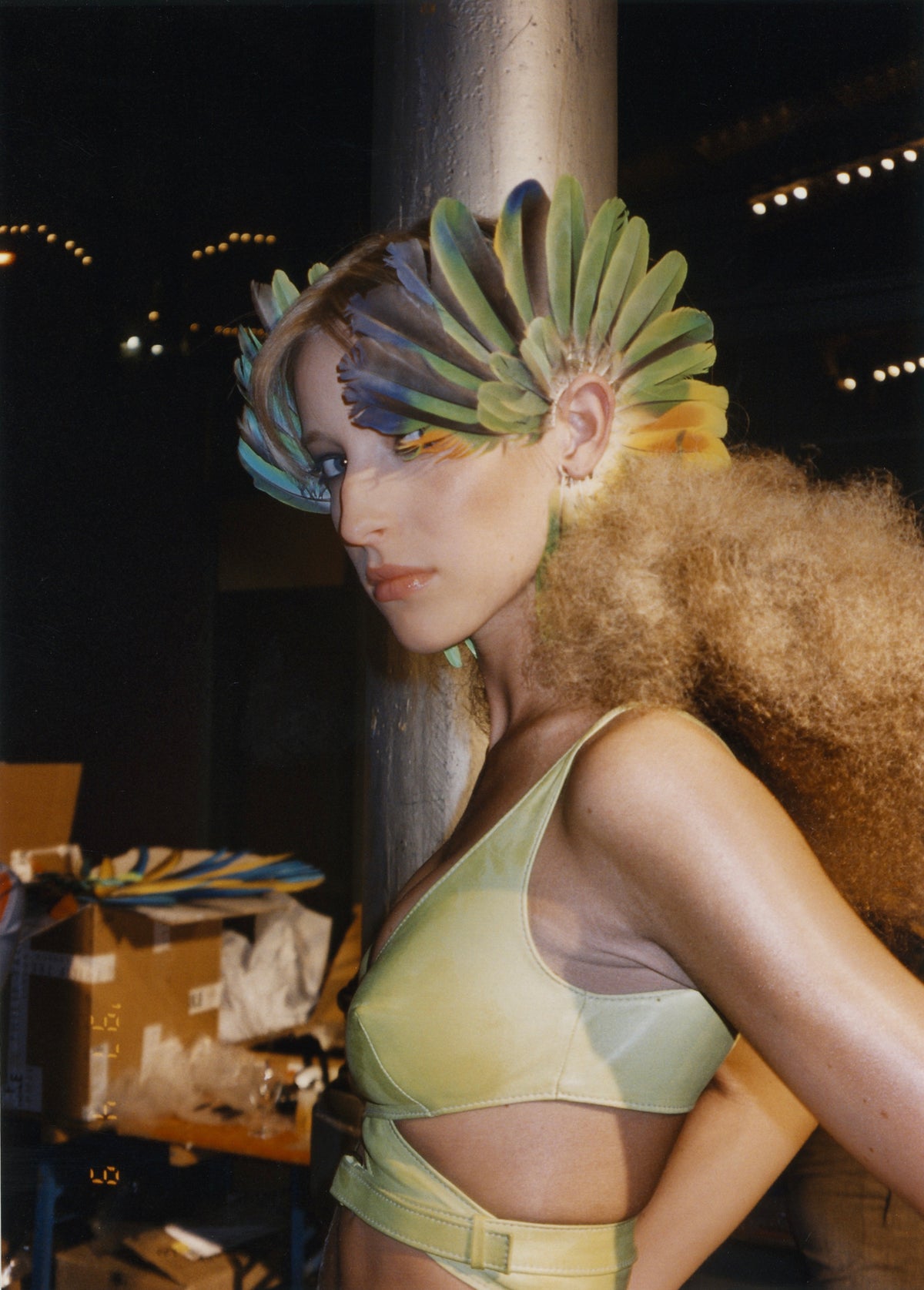
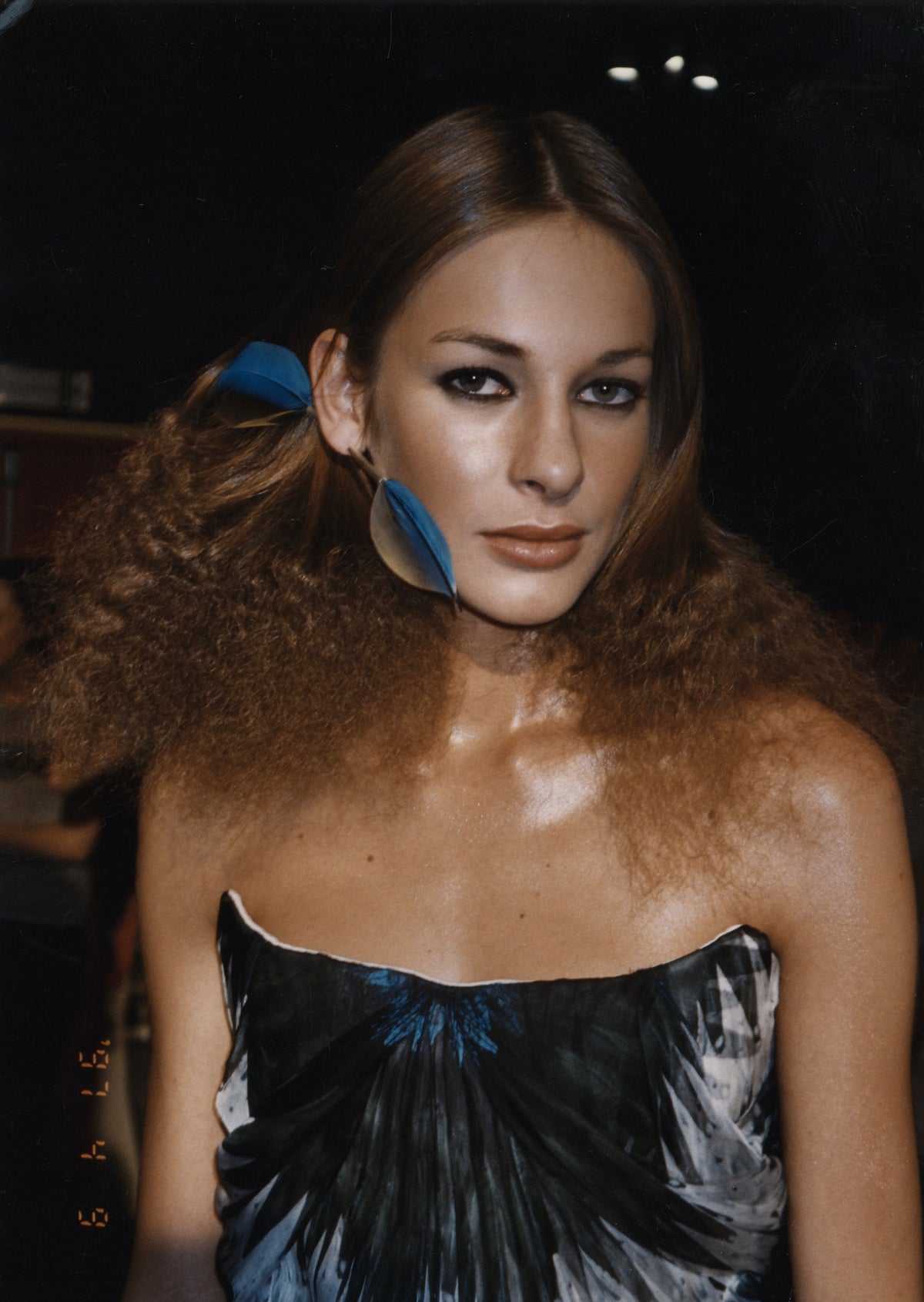
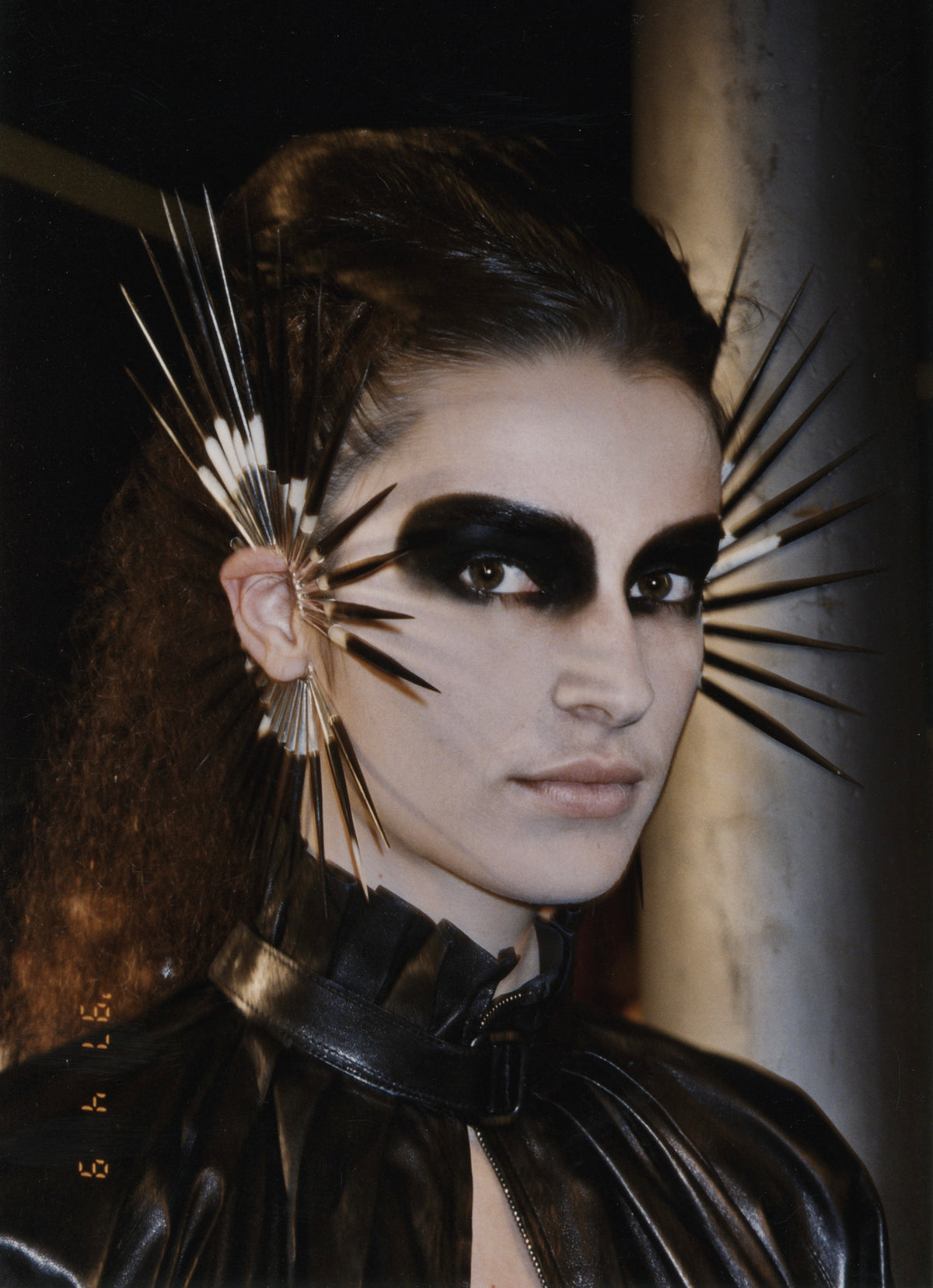
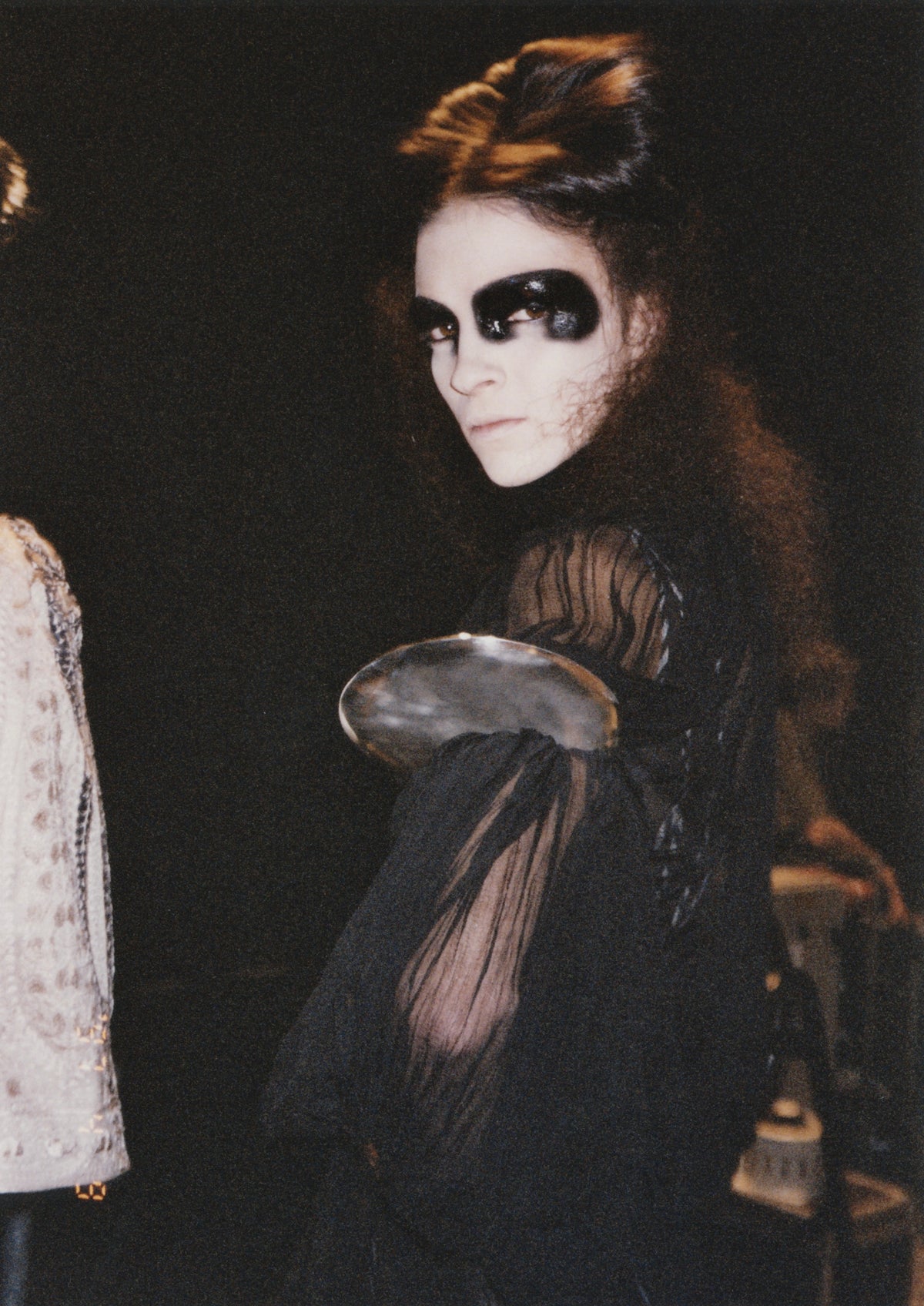
The photographs in Mira’s archive extend that sense of proximity. Polaroids, personal snapshots and behind-the-scenes images from collections including The Hunger, Dante and Irere return McQueen’s world to a human scale. They show the atmosphere around the clothes: the faces, bodies, gestures and friendships that surrounded their making.
The backstage photographs from Irere, Spring/Summer 2003, are especially revealing. Taken by Mira, they do not present the collection from the distance of the runway, but from the charged space before the reveal. Models appear in close view, their faces painted, hair sculpted, bodies still, alert and waiting. Shaun Leane’s feather and porcupine-quill jewellery appears not as a finished image on the runway, but as part of a living backstage environment: being worn, adjusted, inhabited and transformed.
In these images, the spectacle is still becoming itself. The camera catches the moments before fashion becomes performance: the concentration, the intimacy of preparation, the strange calm before movement. They show McQueen’s world not only as theatre, but as labour, collaboration and trust. Through Mira’s lens, the backstage area becomes another form of archive—one that preserves atmosphere rather than only object.
Works on paper
Ideas before they became objects
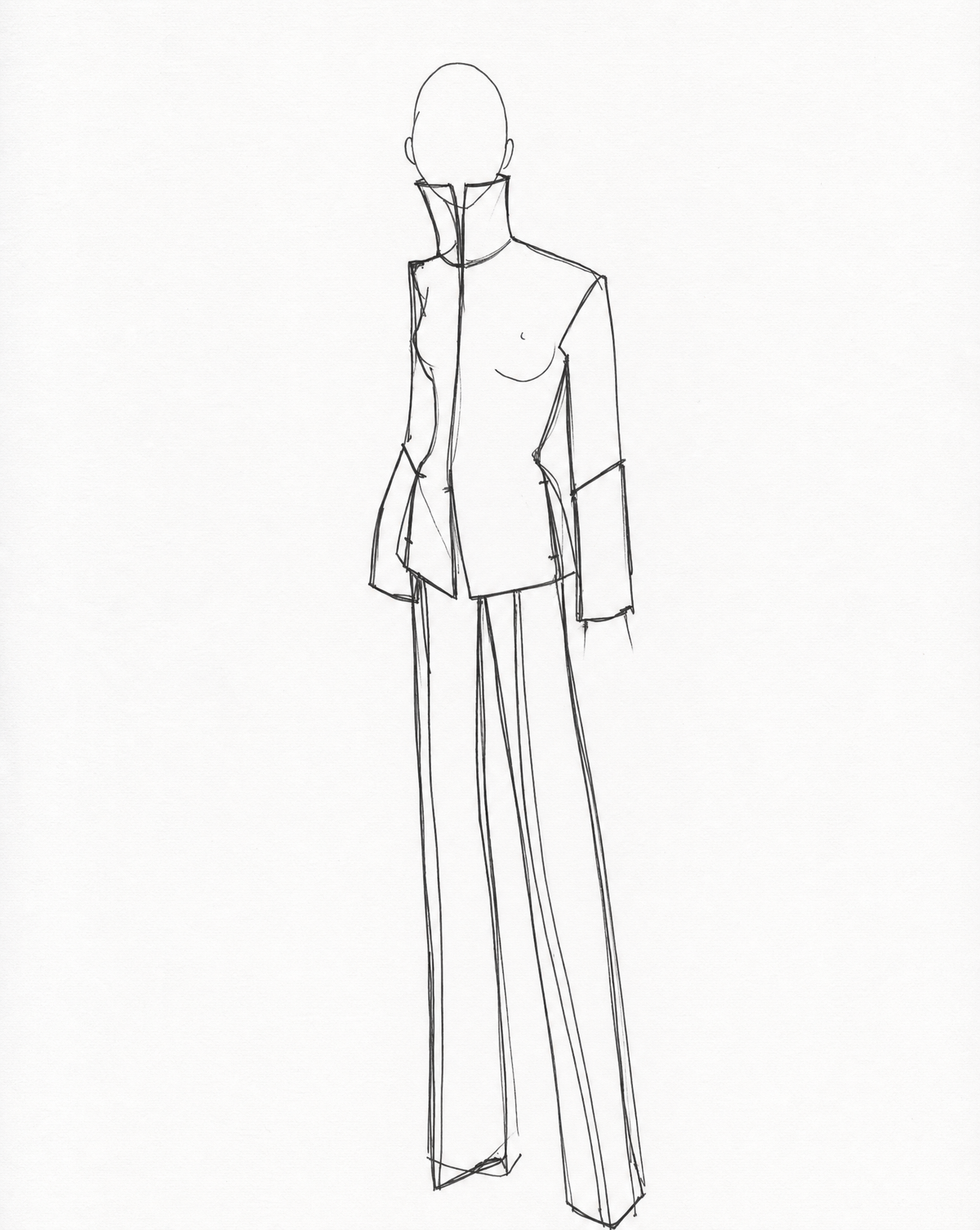
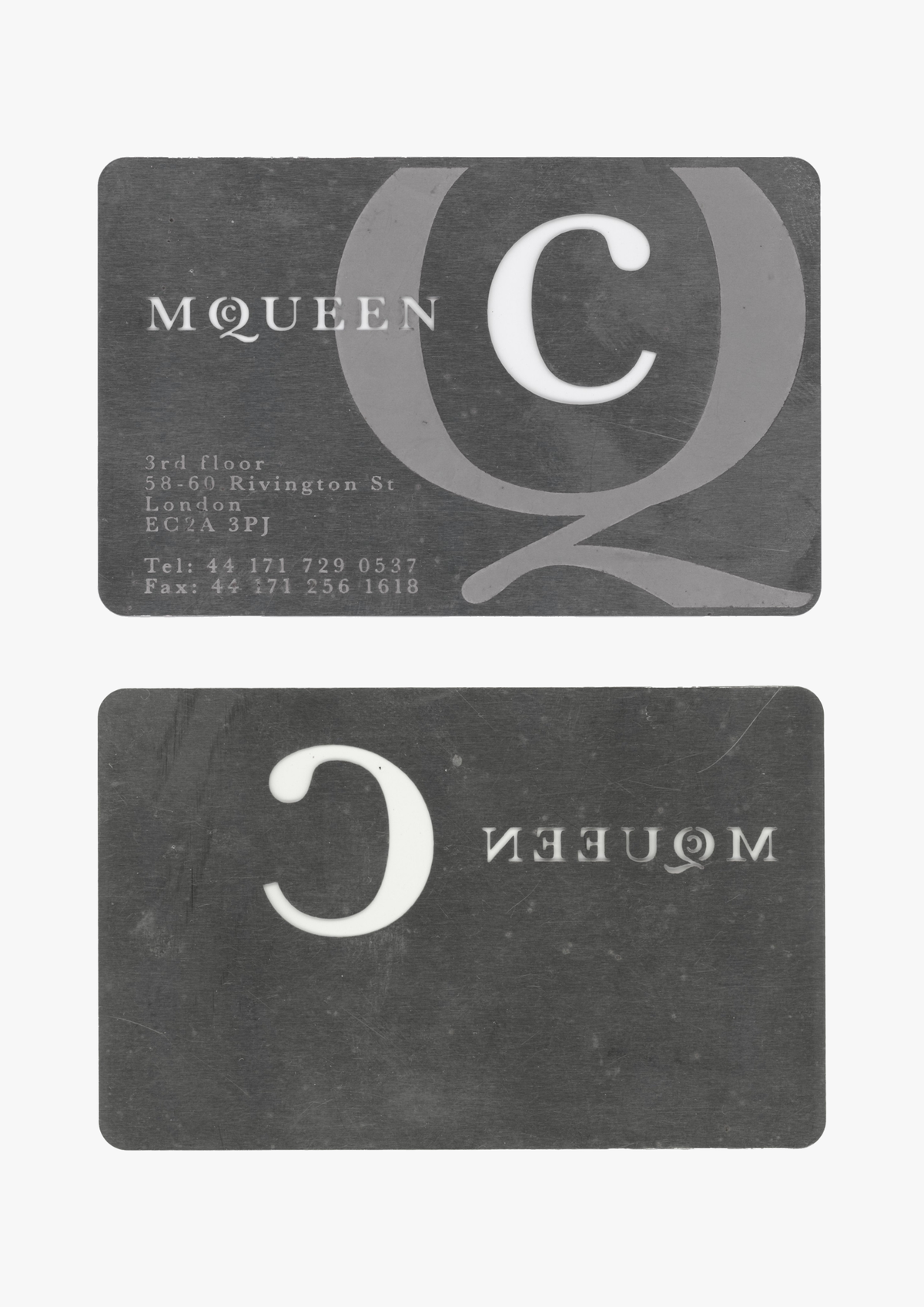
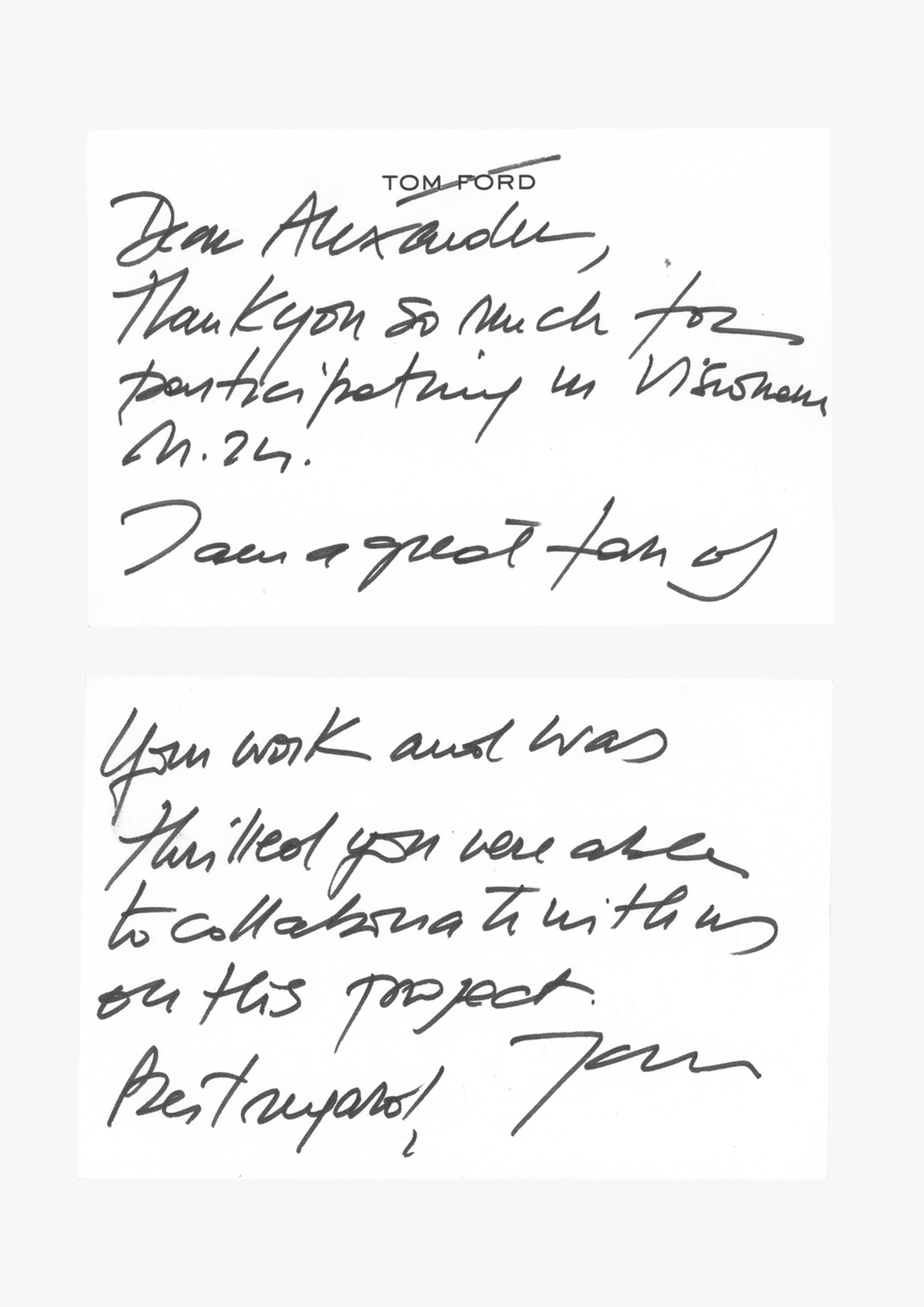
The paper archive is equally important. Invitations addressed to Mira. Credits bearing her name. Post-show drinks cards. Lookbooks. Museum documents. These are the kinds of materials that might easily have disappeared, yet with time they become crucial. They prove presence. They show where someone stood in relation to the work.
Evidence of presence
The private life around the work
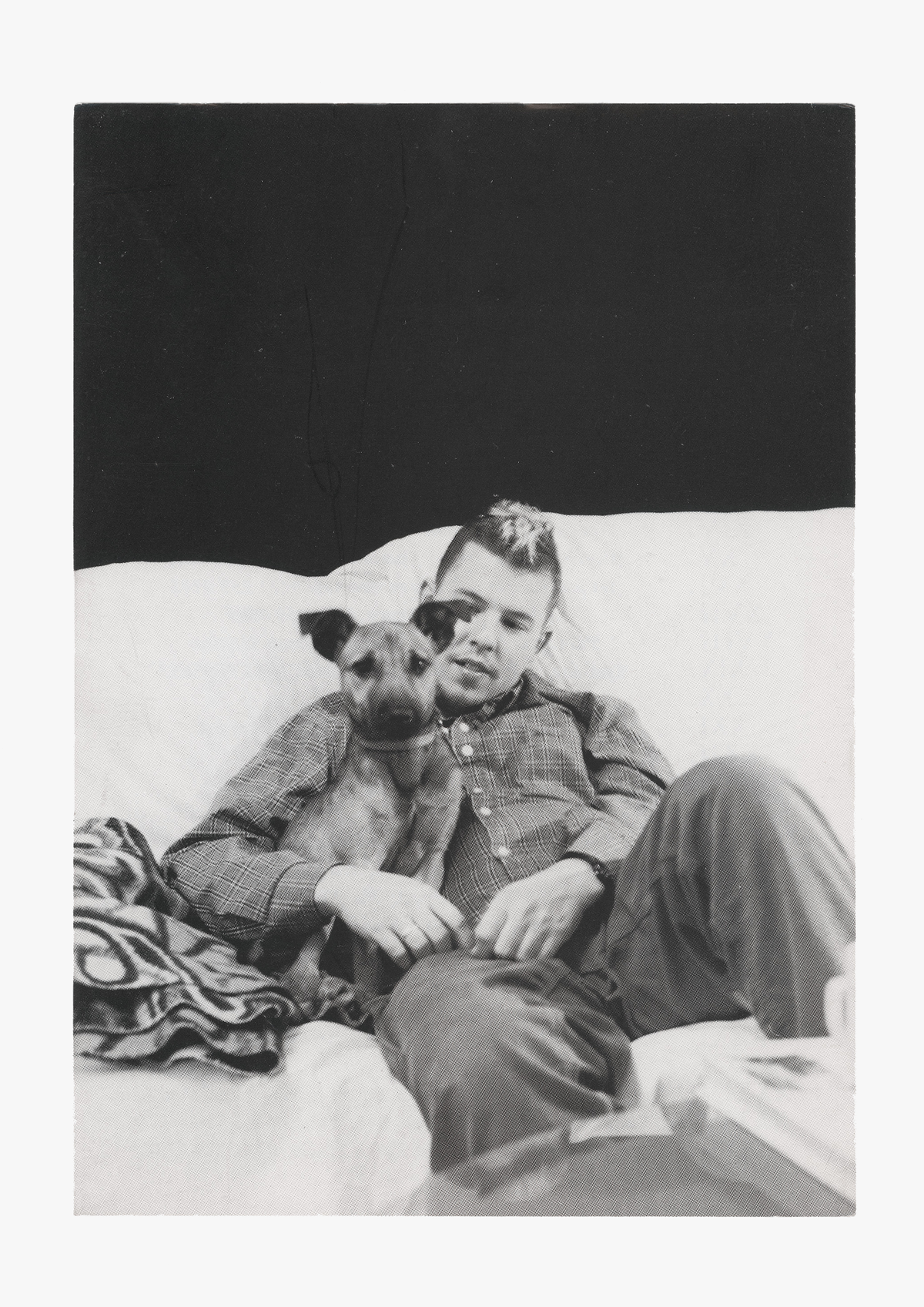
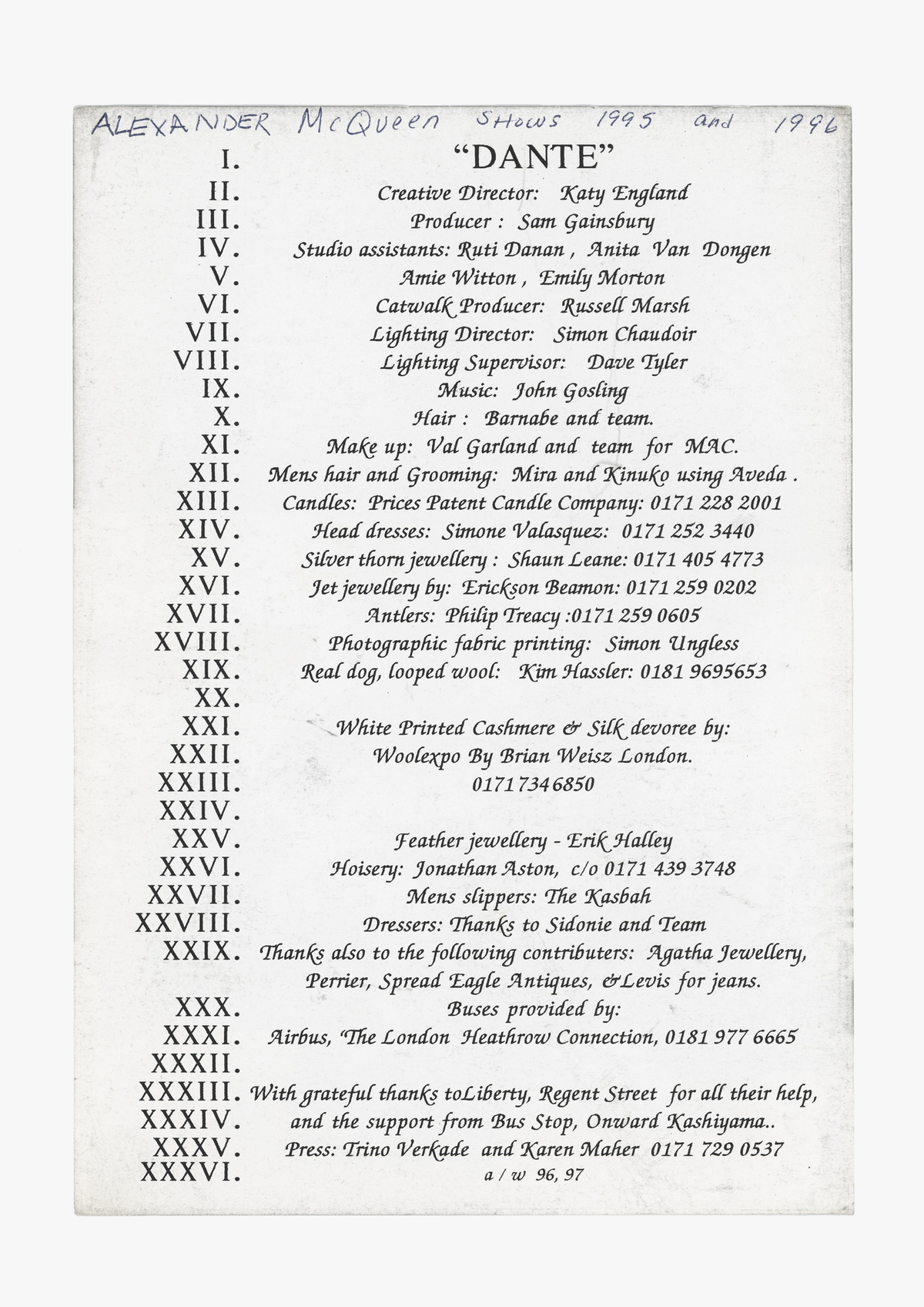
A hand-typed production-credits card for Dante, Autumn/Winter 1996–97, names Mira for men’s hair and grooming. On its reverse is a black-and-white photograph of Lee reclining on a sofa with Minter, the dog he adopted with Mira, inside the Hoxton Square apartment where private life and creative life overlapped.
The card is both professional record and domestic trace. It places Mira within the formal structure of the show, but it also preserves something more intimate: Lee at home, the dog nearby, the apartment functioning as part living space, part studio and part refuge.
That is what gives the archive its particular depth. It does not simply document McQueen’s collections. It preserves the atmosphere around them.
Mira Chai-Hyde
A language shaped through hair
Mira’s own story is inseparable from that atmosphere. Born in Manila and later raised in California, she came to hair through instinct as much as discipline. She moved to London to study at Vidal Sassoon, where she was named “Best Barber” in 1989. London became her home for 18 years: the city where she developed an approach to hair that was sharp, intuitive and emotionally intelligent, and where she found herself among the designers, musicians, photographers and stylists reshaping fashion’s visual language.
Long before men’s grooming became a defined language of celebrity image-making, Mira understood that hair could alter how a person carried themselves. It could reveal character. It could sharpen presence. It could make someone appear more fully themselves.
Her career would later move through fashion, music and Hollywood, working with actors and musicians including David Bowie, Brad Pitt, George Clooney, Pedro Pascal and U2. But her place in the McQueen story is different. It is not only professional. It belongs to the private architecture of a life.
She knew Lee before the mythology hardened.
Legacy
A record of relationship
For Mira, Lee was never only the figure fashion history would come to revere. He was the person behind the mythology: vulnerable, brilliant, daring, and alive with an emotional force that made the work unforgettable.
That is why the archive carries such weight. Each piece holds more than provenance. A jacket from a defining collection also carries the memory of exchange. A skirt made to order records a specific body and a specific friendship. A production-credits card confirms professional contribution while preserving the domestic world behind it. A lock of hair inside a label turns a garment inward, toward the body and its traces.
The archive asks to be read not only as a record of McQueen’s design language, but as a record of relationship. It reveals how objects move through private life before they become public history. It shows how fashion, at its most powerful, can hold cultural significance and personal memory at once.
Parting with such an archive is not simple. These pieces are not anonymous objects. They are bound to friendship, youth, labour, grief and love. They hold the years Mira spent close to Lee and the private memories that surround his work. But there is also generosity in allowing them to move outward: into institutions, exhibitions, research and the hands of people who understand that McQueen’s legacy is not only visual. It is emotional, intellectual and human.
His work was never only about fashion. It was about the body and its wounds. About beauty and fear. About history, violence, romance, rebellion, grief and tenderness. It asked fashion to carry feeling at its most extreme.
Mira’s archive allows us to encounter that work from a different angle. Not only from the front row, not only from the museum vitrine, not only through the mythology of genius, but through the rooms where the work was made, worn, gifted, kept and remembered.
It is an archive defined by proximity.
What remains
A record of presence
“Mira kept those traces.”
To move through the archive is to see Lee before history fixed him in place: the friend, the designer choosing fabric, the maker working late into the night, the person whose gestures of care became garments, photographs, credits and traces.
Because she did, the archive remains more than a record of fashion. It is a record of presence.