

Jewellery & Exhibitions
Cartier in Melbourne: what remains
Black opals, a singer’s jewels and rooms drawn in colour. A reflection on Cartier at the NGV, and the Australian stories within it.
A world within a jewel
A jewel can hold a surprising amount of life: the hand that drew it, the person who commissioned it, the occasion for which it was worn. At the NGV, Cartier’s history unfolded through these encounters, bringing objects usually seen in portraits or private collections into public view.
The Melbourne exhibition closed on 4 October 2026. Created by the V&A in partnership with the NGV and in collaboration with Cartier, it brought together nearly 400 jewels, timepieces and precious objects. Its scale was impressive; its more intimate stories give us reason to keep looking.
An Australian thread
Dame Nellie Melba gives that history a local voice. One of Cartier’s early Australian patrons, she wore a diamond and pearl corsage ornament at King Edward VII’s coronation concert in London in 1902. Later adapted as a necklace, the piece belonged to a life in which performance and personal style were closely entwined.
A special-order bracelet made by Cartier New York in 1928 offered another Australian connection. Set with black opals, diamonds and platinum, it holds colour within an exacting Art Deco structure. Curator Helen Molesworth identifies the opals as likely originating in Lightning Ridge, New South Wales. The stones’ shifting colour brings a quieter, more elemental presence to the precision of the setting.
Colour, given room
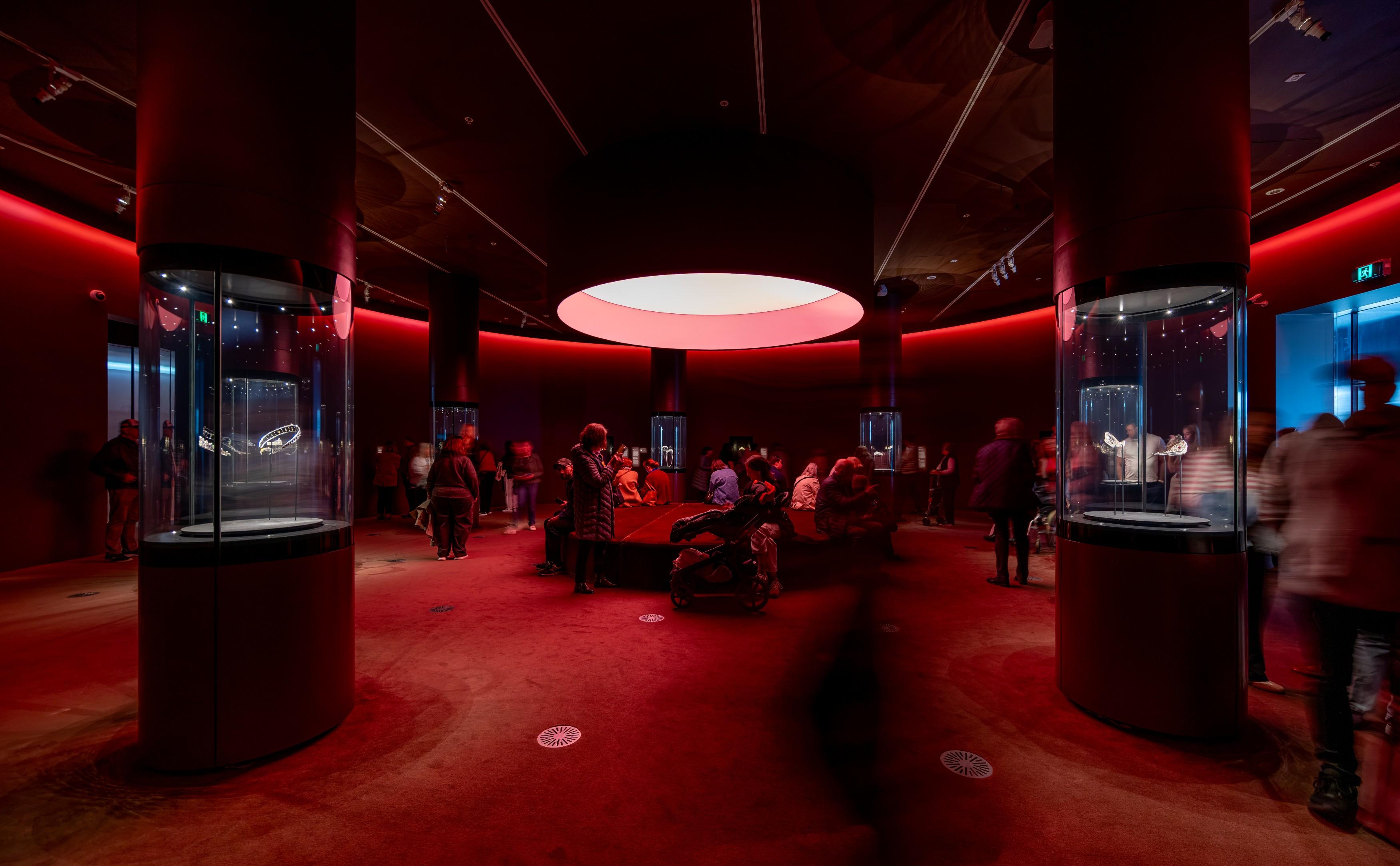
The exhibition’s setting made jewellery a spatial experience. Studio Sabine Marcelis and CLOUD developed rooms around the shapes, colours and material qualities of gemstones, allowing the architecture to share in the objects’ visual intensity.
That relationship feels especially apt for Cartier. A strong line, an unexpected colour pairing or a sculptural volume can make a jewel recognisable before its signature is read. The drawings, photographs and archival materials presented alongside the finished pieces gave those decisions a visible history.
The panther carries this continuity particularly well. First appearing in Cartier’s work in 1914, it has remained a recurring presence. Under Jeanne Toussaint, the animal took on new force: in 1948, a three-dimensional panther appeared on an emerald brooch. Its appeal lies as much in posture and attitude as in the stones themselves.
What remains
After an exhibition closes, certain details linger: colour held inside an opal, a singer’s ornament given another form, the confidence of a panther rendered in precious materials.
These are the histories that bring us back to jewellery. Design and workmanship matter; so do the lives through which a piece has passed.
CARTIER was presented at NGV International, Melbourne, from 12 June to 4 October 2026. Explore the NGV’s exhibition archive.